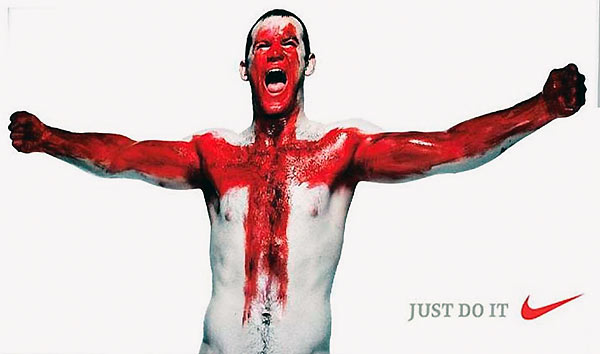
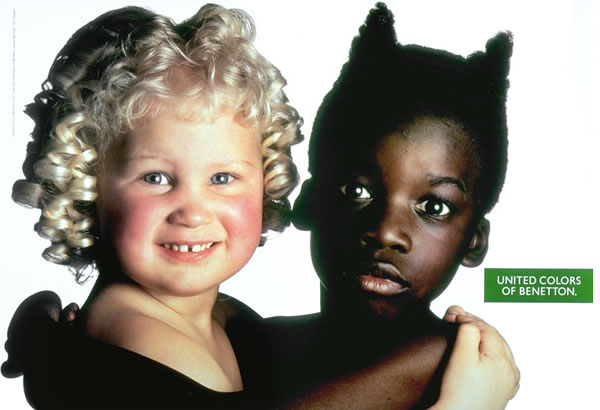
Ever wonder about the effect all the advertisements, promotions and special offers that we are bombarded with daily, influences us? Do you believe the messages you see? Does the media influence your concept of what it means to be a man or woman?
Have a class discussion regarding what you think images from the media define masculinity or feminity?
Are they positive or negative messages?
Do commercial companies exploit these images to sell their product or service?
Here are a few videos that may give you food for thought.They are American but since American media has such a profound effect on the films we watch, music we listen to or clothes many of us wear today in Ireland I thought they would be relevant.
Mass Media Influence On Females
Body image is an important topic for teenagers and young adults.Many want to fit in, yet there is criticism of the media regarding it's portrayal about what is acceptable in society.In numerous women's beauty magazines, there is overwhelming pressure on young women to slim down to weights which are often considered to have health risks.
Is it the magazine's fault for the negative interpretation or the consumer of the magazines?
Should magazines be more responsible for the positive image of women that they promote?
Do you think those magazines would be rewarded through sales?
A magazine company is in the business of selling magazines?
Would this help or hinder their sales?Would you buy the magazine?
This video was made by the Dove Self-esteem fund and has an interesting viewpoint on the beauty industry. Youtube video Beauty Pressure
Here is a video entitled Killing Us Softly 4 Advertisings image of women by Jean Kilbourne, where it gives a snapshot regarding how advertising is influencing statistics of violence in the USA.Many of the adverts shown we have already been exposed to in Ireland with our ability to access more globalised content through our TV subscription packages and access to the internet. Youtube Video Killing Us Softly 4: Advertising's Image of Women (Trailer)
Do you think adverts sell more than a product?
Do you see any adverts with negative effects for influencing children?
What responsibility should the beauty product company have?What responsibility should the parent have?
Are the media providing unhealthy, unrealistic expectations in terms of gender stereotypes?
Mass Media Influence On Males
The issue of masculinity in the media is not discussed as openly yet.Portrayals of what it means to be a man and more worryingly what it means not to be a man are discussed with frankness in this videoclip entitled Tough Guise:Media, Violence and the Crisis in Masculinity made by
www.mediaed.org Jackson Katz argues that widespread violence in American society, including the tragic school shootings in Littleton, Colorado, Jonesboro, Arkansas, and elsewhere, needs to be understood as part of an ongoing crisis in masculinity.
Is there anything in the video you agree or disagree with?
What do you think about the topic raised in this video?
Is media violence linked to crime?
What did you think about the statistics provided?
Do you think these trends would be similar in Ireland or not?
You Tube Video Tough Guise: Violence, Media and the Crisis in Masculinity
Can you protect your children from the effects of mass communication?Here is a clip from a documentary entitled Consuming Kids:The Commercialization of Childhood (Trailer)
Are we training our children to be better consumers?
What are the positive and negative implications of this?
Are we making it easier to be brainwashed by media?
Do you think companies are providing cars/holidays targeting children?
Do you think marketing products to children happens often in todays world?
Is there anything parents can do to protect their children?
Youtube Video Consuming Kids:The Commercialization of Childhood (Trailer)
The type of news we watch is often dependant on the information we want to find out about. For an extreme example, a militant racist may access news information which corresponds with their viewpoint. Or someone who is primarily interested in showbiz events may bot be as clued into current events. The same can be said if we are searching for unbiased news. You probably have heard of the concept of "spin", a way of twisting a story to match an existing viewpoint. As a result of the internet and satellite TV, we are no longer constrained by Irish news media to get our information. When you choose the news channel for your information ask yourself, is the story being slanted a certain way or is it unbiased?
Here is a clip from the first part of Michael Moore's Farenheit 9/11 movie. The first 7 or 8 mins deal with how the American news media handled the controversial George W, Bush v Al Gore presidential debate Youtube Video Fahrenheit 9/11-The Movie Part 1 Bush's Cousin calls the election in 2000
So if you are curious about how the news works here is an example of how the news industry works in the US. Youtube Video How the fake news works
Uploaded by UpdocFilms on 18 Apr 2008
It is hard to prove bias in the news but some of the following hints may be helpful. When viewing a news story ask yourself:
1-Do the reporters cover the best points of both sides of the issue?
2-Are there facts omitted to preserve a certain viewpoint?
3-Are the studies being reported on coming from just one side?
4-Where is the news story placed in terms of other news story placements? (eg should the coverage of The Queen at a royal engagement be placed before coverage of a natural disaster?And does this relegate the impact of the natural disaster as it is on afterwards?)
5-Are there facts placed with a story to taint a guest?
6-Are the sources selected to cover the story biased?
7-Are certain aspects of Government policy given preference over other aspects of the same policy?
8-Are certain groups of people labelled or nicknamed? How does that influence your perception of who is being talked about?
9-Are reporters giving theor own policy reccommendations to Government?
10- Are minority groups being heard regarding a particularly relevant news report?
Can Bias Be Positive?
For example, an editorial or opinion poll can have a certain slant as it is openly acknowledging a certain viewpoint over another one.
Stories or statements which makes one side of a debate look bad if the information is accurate
Non Governmental policy stories which do not necessarily have to be balanced
Here Jon Stewart, is a guest on the show Crossfire and highlights the importance for news readers to spin stories in particular ways to suit their agenda. What do you think about this clip?
Are there examples in Irish news where coverage of a particular story was biased in your opinion?
Pleasse take the time to leave some feedback in the comments section
What was difficult in this task?
What did you learn?
Is there anything else that could have been included in the topic to make it easier for you to understand?
Was the topic explained well or not?
Are there any video links from Youtube that may also be useful? (if so please copy and paste the link in the comments section with a sentence explaining what it is)
Ever wonder what the leaders of Ireland's past would have made of Ireland today? I made a documentary exploring this as a topic for education. Please have a look as what has happened Ireland is affecting everyone. The video also questions the tactics of national and European politicians, banks, global financial services and how the Irish people have reacted to it. It's 17 minutes long but it might spark your interest.
Ireland 2016 The European Rising
Published on Dec 30, 2012 by Marcus Howard
Here is part 2 with the disputed content removed. Hopefully it will stay up this time.
Debtoptions was formed in late 2012 by Clare Cullinane. The process is as follows: Ordinary people who find themselves with massive amounts of unpayable debt, who the banks put enormous amounts of pressure on despite being directly responsible for the people's inability to pay in the first place, individually sue the banks for €1,000,000 each.
The Irish Sue the Banks
Published on Oct 23, 2012 by Jim Flynn
Irish homeowners sue banks for €250 Million and counting
Published on Nov 6, 2012 by RealityIreland
Ireland is seeing a growth in housing repossession but it is also seeing an education of it's population, where everyday people are learning about the constitution and their rights. This video is an example of how the constitution may help prevent a family from getting evicted from their home.
Constitution Halts Sheriff
Uploaded on Feb 21, 2012 by Ben Gilroy
For business owners unaware of their rights, there are also significant legal rights you are entitled to if in danger of receivership. In this video, People For Economic Justice Ben Gilroy mentions in this video that "You cannot have a receiver forced upon you that does not provide and act on a duty of care to you!"
Ben Gilroy Halts Receivers
Published on May 17, 2012 by Ben Gilroy
Another interesting video about The European financial crisis is an enlightening educational video about the options Europe is facing regarding Greece from the globally respected Khan Academy.
An excellent documentary on how the recession in Ireland is having an impact on young people across the country by Stacey Dooley. This would be a great documentary to show in schools so young people could talk about and get interested in Ireland's future.
Ireland Lost and Leaving Part 1
Uploaded by ErmmNIPublished on Jul 4, 2012 Ireland Lost and Leaving Part 2
Always wanted to learn guitar or stuck for a Christmas present? Why not learn in The Spirit Store on Monday nights 7.30-8.30? Vouchers available for €50 for 5 lessons. 10 week course beginning in January. Relaxed, friendly atmosphere. Visit http://spiritstore.ie/bios/guitar_lessons.html or contact Marcus 087-2186127
Spirit Store Guitar Lessons
Also check out this documentary about the Spirit Store made by Tim Shearwood
http://www.youtube.com/watch?v=-pT5dFnM8DA
Guidelines: The oral presentation to the candidate’s peers should be based on a written item from the module such as the case study, the critique/review or the specialist report. Use visual aids, and include the opportunity for the candidate to answer questions from the audience. The oral presentation should be recorded on video tape.
Assessment Criteria:
Clarity of speech, tone, inflection, breathing, voice, pace, confidence (15)
Use of language-formal/informal, appropriate to audience (10)
Command of subject, captures and sustains interest (15)
Timing and structure (10)
You have the option on presenting some of your previous work. You can pick
from the case study, critique review or specialist report. It is up to you which one
you pick although I encourage students to present their work on the case study
because it is fresh and since they put so much work into their
case study, you might as well show off your work, This is at your discretion
however.
Here are some behaviours discussed from presentation coach Doug Jeffries
regarding how to make your presentations more effective.
Your target market will affect how you pitch the presentation. To appeal to everyone will diminish thescope of your presentation. Are you dealing with people who know nothing about what you present? If so, how will you pitch it accordingly? Are they experts about what you are presenting? How will that change how you use language? What kind of education does your audience have? What is the generalage group? How will that effect the delivery of your presentation?
Youtube Video: Target Market Research-Identifying your Target Audience
Here are some slides (there is no audio in this clip) showing how to have more of a command overyour presentation Remember to structure your presentation with an introduction, body and conclusion.
Timing is essential. Going over or under time shows a lack of preparation and gives the audience theimpression that the presentation was composed at the last minute. This videoshows a feature on Powerpoint 2007 to rehearse your timings and to deliver a more effective presentation.
Presenting your CV can seem a daunting
task. It is important not to just run through what is just on the CV,
the employer has that already. Now is your chance to shine and give them
a fuller picture of your job potential.
Have a look at
this video from Brightwater Recruitment where 2 candidates are taken
through a presentation class. Is there anything you could learn from the
feedback they were given? Youtube Video Jobs Club Presenting Masterclass
Here
are 2 videos below from www.gradireland.com highlighting some of the
big mistakes which graduates often make as well as dealing with
competency based interviews.
Here
are some of the top questions being asked in interviews. Put your own
style on how you answer them but it is more important than ever to
prepare as interviewers want to be able to hire the best people for
their job. Youtube Video Top 36 Interview Questions
Guidelines: A case study on information flow within an organization familiar to the learnerThe case study will provide evidence of research and analytical skills, knowledge of communications theory and ability to present information visually. It should be word processed, with graphics/diagrams/charts etc. Assessment Criteria: Research skills, notes, sources etc (50)
Analysis of situation, conclusions and recommendations (70) Knowledge of communications theory, use of terms, key players/factors identified, application theory (60) Use of graphs/charts/diagrams to explain findings clearly (40)
The word communication means to share, impart or make common. It comes from the Latin word communicaire. Communication is an active process that is continually changing and evolving. How well we communicate is often determined by how easily we can share or impart information or find common ground with other people.
Language changes overtime and someone like Shakespeare may have difficulty understanding “textspeak”. Everytime we speak we put together a selection of words we may have never used before. 2 people communicating with each other may have no idea where they will end up in conversation.
What Reasons Do We Have to Communicate?
-Survival
-Co-operation
-Personal needs
-Relationships
-Persuasion
-Power
-Societal needs
-Economy (buying and selling)
-Information
-Making sense of the world
-Decision making
-Self-expression
Discuss in class examples of the reasons for communication as highlighted above. Can you give a real world example as to why any of the points above are reasons to communicate?
Have a look at this video made by the Infoasaid project to highlight the importance of two way communication to humanitarian organisation's emergency programs when natural disasters occur.
How the audience, message and channel elements factor into the communication process:
The Communication Process
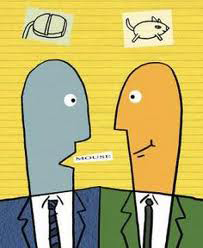
Lets say the person on the left in the diagram above wants to send a message to the person the right.The man on the left has to decide what language the man on the right will need in order to understand the message.Also the man on the left has to take into account societal factors such as the relationship between them and the context of the message These 3 factors of language, relationship with each other as well as the context of the conversation will influence the tone of their conversation. Next, the appropriate channel needs to be selected to communicate the message. Typical channels of communication include: Writing, face-to-face speaking, having a telephone conversation, video-call, email, fax, SMS or even through instant online messaging providers such as Instant Messenger.The man on the right may give feedback to the man on the left to further his understanding of the message and having more clarity regarding the appropriate response. The picture below gives another explanation of the communication process.
Here is a video which uses the model of a message sent through a paper aeroplane to demonstrate the communication process:
Message: The information you want to communicate Encoding: The process of transferring info you wish to communicate into a form that can be sent and decoded at the other end. Encoding is is the process by which information from a source is converted into symbols to be communicated Channel: The method used to communicate eg face to face meetings, telephones & video conferencing, letters, emails, memos, reports Decoding: the process of transforming information from one format into another, usually information sent from the sender. Receiver: Must understand your message and is at the receiving end of the communication channel. They receive decoded messages or info from the sender. Sometimes, the receiver has to decode the message themselves
Example of positive feedback
Feedback: is the verbal and nonverbal reaction to a communicated message. Close attention to feedback can give the sender confidence that the message is understood. Feeding back part of the output so as to increase the input is positive feedback; feeding back part of the output in such a way as to partially oppose the input is negative feedback.
Context: the relevant constraints of the communicative situation that influence language use, language variation, and discourse. This may include the surrounding environment or broader culture (corporate culture, international culture). It can be the surroundings, circumstances, environment, background, or settings which determine, specify, or clarify the meaning of the message
A famous still image capturing John McCain which went viral. It significantly damaged his chances of appearing strong in the US 2008 election
In order for the transfer of information to qualify as communication, the recipient must understand the meaning of the information transferred to them. If the recipient does not understand the meaning of the information conveyed to them, communication has not taken place. How is the communication process being hampered in this clip below from the TV show Fawlty Towers? Fawlty Towers - Communications Problems
Communication Flows in an Organization/Communication Routes
All organisations need to use communications to survive, some companies use communication better than others which can help to cut costs and maximise productivity. Others are slow regarding how information flows through the organisation and can be slower to react to sudden changes in the marketplace.
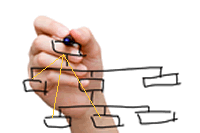
Communication routes within an organisation
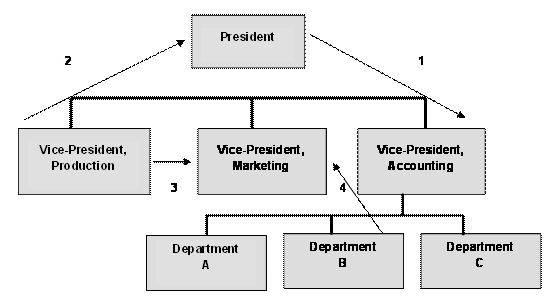
In an organization, communication flows in 5 main directions-
The first 4 points are methods of internal communication as they happen within
the organisation 1 Downward Communication
This communication flow is used by the managers to transmit work-related information to the employees at lower levels. Employees require this information for performing their jobs and for meeting the expectations of their managers
Can you think of any disadvantages of downward communication?
Why Downward communication is used by managers
Providing feedback on employees performance
Giving job instructions
Providing a complete understanding of the employees job as well as to communicate to them how their job is related to other jobs in the organization.
Communicating the organizations mission and vision to the employees.
Highlighting areas of attention
Downward communication starts with top management and flows down through management levels to line workers and non-supervisory personnel.
The major purposes of downward communication are to advise, inform, direct, instruct, and evaluate employees and to provide organization members with information about organizational goals and policies.
Most effective if top managers communicate directly with their immediate supervisors and that those supervisors communicate with staff
Problems with Downward Communication
-Employees can feel confused, not informed or powerless and might fail to carry out their task
-No room for employee feedback
-Downward communication is likely to be filtered, modified, or halted at each level as managers decide what should be passed down to their employees.
-Sometimes, managers do not provide employees with the information they need to carry out their tasks effectively
-Managers often withhold information to keep employees dependent on them
2 Upward Communication
-Upward communication deals with the information flow from the bottom up, from the subordinates to the superiors -Upward communication is a response to the downward communication
A disadvantage of downward communication was the lack of feedback. Upward communication gives the employee a chance to comment or constructively criticise senior management's policies by reporting to their department managers, who in turn, report to the senior manager.
You can see how the communication process described earlier is becoming more relevant here as shown below
How do you think the communication process is used in upward communication?
Upward communication enables managers to understand if their messages have been heard and understood by employees.
Upward communications may include judgments, estimations, propositions complaints, grievance, appeals, report
Management can then be informed of the progress being made at lower level
or if they have suggestions to better implement management policies and strategies.
Advantages of Upward Communication
Employee morale is boosted
Communication is more efficient
Improvements can be made in the managerial decision making process
Greater co-ordination through the organisation.
Ideas and proposals are shared to give a greater knowledge of the people in your organisation
Saves time
Greater co-operation with team members
Helps collectively solve problems and conflicts within the organisation
Disadvantages of Upward Communication -Upward communication is likely to be filtered, condensed or altered by middle managers who see it as part of their job to protect upper management from nonessential data originating at the lower levels. -Middle managers may keep information that would reflect unfavourablyon themfor reaching their managers or claim the idea as their own
3 Lateral Communication
Communication is lateral (also known as horizontal) when it operates on the same level. They mat be in different functional levels, but in the hierarchical structure of the organisation, they are at the same level eg supervisors from different departments.
Information is often co-ordinated between departments at this level.
Advantages of Lateral communication
Tasks accomplished more effectively
Helps solve problems
Greater teamwork
Helps build goodwill between departments
Improvements in efficiency
4 Diagonal Communication
Communication that takes place between a manager and employees of other workgroups is called diagonal communication. It generally does not appear on organizational charts. For instance - To design a training module a training manager interacts with an Operations personnel to enquire about the way they perform their task.
5 External Communication
Communication with those outside the company is external communication. Suppliers and customers are communicated to by supervisors. For example to raise capital for the business, the manager may communicate with a bank manager.
Advantages of External Communication
It helps the sales volume of the organisation
Increases positive public relations (PR) with the customer
Operations run more efficiently
Helps profit
Helps achieve the goals of the organisation and increase customer satisfaction
The Differences between Formal and Informal communication
Formal Communication is concerned with the hierarchical chain of command. Communication flows depending on how the organisation has been formally arranged. eg where there are many departments and no flexibility in terms of job duties and responsibilities. Formal communication strictly adheres to the rules, conventions and ceremony of the organisation.Communication through a rigid channel of command can obstruct the flow of free communication.It is often considered to be time consuming and can lead to a lot of distortion.
Methods of formal communication include:
Department meetings
Conferences
Telephone calls
Company news bulletins
Special purpose publications and interviews
Informal Communication is often known as the grapevine. This style of
communication does not follow traditional authority lines like you would with formal communication.Informal communication occurs according to the needs of individuals. Often, this communication is oral.
When one person has some information of interest, they pass it along informally to a group
A disadvantage of informal communication is that the information may be based on rumour and therefore it may not be precise. This could harm and not help the organisation. Fixing the flow of communication after something has gone wrong is more difficult as it will be unclear where the responsibility for the communication originated from.
However, for the efficient working of any organisation both formal and informal communications are required
Perception
It is how we make sense of the world by how we see and perceive it
It is the way how we select, organise and interpret info through our senses of sight, hearing, smell, taste and touch
Our senses are not always 100% reliable, sometimes we may filter out unnecessary info
Perceived Information is then integrated and analysed before a decision is made
Our perception is often our reality. Sometimes this can mean that we don't always see what is really there as our perceptions are often formed through our experience of life as shown in the diagram below
Perceptions in Advertising
Do companies try to manipulate our perceptions to purchase their product or message?
The Columbine high school shootings in the USA in 1999 saw the killing of 12 school students by two fellow classmates. Perceptions about what influenced them on this murder rampage abounded in the media, with blame attributed to violent computer games, angry music and in particular the musician Marilyn Manson. The allegations turned out to be unfounded. Celebrity documentary maker Michael Moore conducted an interview with Marilyn Manson about his thoughts on the shooting incident. Here is a snippet from that interview so you can see how perception can lead to unneccessary bias:
Universal facial expressions signify anger, fear, sadness, joy and disgust. Thus, if you smile frequently you will be perceived as more likable, friendly, warm and approachable. Smiling is often contagious and a person will react favorably. We have 250,000 facial expressions.
Your eye-contact can give clear indicators regarding whether you are telling the truth or not.Have a look at these 2 short video clips to see what I mean:
Youtube Video
Anthony Weiner Scandal: Body Language Similarities to Bill Clinton, Tiger Woods, Elliot Spitzer
-Your posture–including the pose, stance and bearing of the way you sit, slouch, stand, lean, bend, hold and move your body in space affects the way people perceive you.
-Mirroring the other person in your posture style, where your left side complements their right side can increase the likelihood of a favourable perception of the communicator.
-Displaying a forward lean or a decrease in a backwards lean also signify positive sentiment during communication.
A gesture is a non-vocal bodily movement intended to express meaning. They may be articulated with the hands, arms or body, and also include movements of the head, face and eyes, such as winking, nodding, or rolling one's eyes.
If you fail to gesture while speaking, you may be perceived as boring, stiff an unanimated.
Touches that can be defined as communication include handshake, holding hands, kissing (cheek, lips, hand), back slapping, give five, a pat on the shoulder, and brushing an arm. The meaning conveyed from touch is highly dependent upon the context of the situation, the relationship between communicators, and the manner of touch.












 Manage